Dance Education Leadership Cohort
Check out our cohort of dance leaders. Luna will work with these professional dance educators through December 2014 to help them move the field forward. We’ll track their progress here.

Check out our cohort of dance leaders. Luna will work with these professional dance educators through December 2014 to help them move the field forward. We’ll track their progress here.
Rebecca Weisser Cervantes has been teaching dance to kids and adults all over San Francisco since 1994. She started at the Mission YWCA teaching Hip Hop to Mission Girls, worked with adults at Rhythm & Motion, parents and their toddlers at the LGBT Center, and now teaches at schools throughout the districtand at The Marsh Youth Theater(MYT). She is the Executive Director of Moving Beyond Productions (MBP), a non-profit 501(c)3 that is devoted to bringing Dance and other art forms to underserved, economically disadvantaged kids throughout San Francisco. Rebecca has a B.A. from UC Santa Cruz in Politics and studied Modern Dance throughout college. She studied African-Haitian at City College San Francisco, San Francisco State University and at studios in New York. She performs diverse forms of dance, including Hip Hop, Salsa, Hula, Modern, Kathak, and Jazz. As co-director of Mixtiso Latin Hip Hop from 2002-2010, Rebecca performed and choreographed pieces for many diverse shows and venues. She choreographs, directs and sometimes performs with her advanced students from Moving Beyond Productions(MBP) at various events throughout San Francisco, and annually for Dia de los Muertos and Carnaval.
LEARNING IN LEADERSHIP
“I acknowledge my spheres of influence and am expanding them. I realized that I have the right and the responsibility to demand better teaching situations.”
I changed my focus from a singular project to an overall view of expanding my non-profit. Through Luna’s coaching guidance, my small project of trying to help Moscone Elementary School become more of a dance school to a deeper change in my way of doing business with the schools as a dance teaching artist. I become more empowered to use MOVING BEYOND productions (MBP) as my dance teaching business, rather than letting schools decide how to employ me. As a result of that shift, I am using MBP to help schools get funding for their programs. It is a win-win situation with the schools and my non-profit.
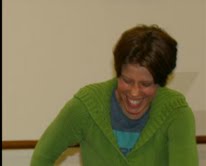 Meg Glaser Terán is a dance-teaching artist currently working with The Wooden Floor (TWF), All the Ars for All the Kids, and VSA California. She uses the Create, Perform and Respond framework, developing awareness of each student’s unique contribution to the class community. Meg worked with Luna’s Building Cultures of Dance Initiative to develop three family dance programs in collaboration with TWF, the Migrant Education program of Anaheim City School District, and Active Learning. As a dancer, Meg has worked with choreographers Beth Burns, Gina Angelique, Shyamala Moorty, heather Gillette, Belinda Cheng, Cheryl Banks-Smith, Victoria Marks, MelanieRios Glaser and Sarah Swenson. A bilingual educator, she previously taught second and third grade for eight years. In 2010, Meg was awarded Elementary Dance Educator of the Year from the Orange County Music and Arts Administrators. She holds a BA in World Arts and Cultures from UCLA and an MA in Education from Chapman University.
LESSONS OF LEADERSHIP
“Success and failure are both fleeting and the work of our lives is not defined by either one.”
Last year at this time, I contemplated leaving the field of dance education because I was not earning enough to support the family. This year, I am working 5-6 days each week teaching dance without a perception of scarcity any more. At each place I work I feel respected and fairly compensated, something I want every woman to experience in her work. When we met with Vicky LaBoskey at the 3-day summit, she [helped us see] the journey of becoming the educator/leader/artist that we envision; and that we don’t have to get off the road because we can’t be that educator/leader/artist right exactly now. It was enlightening to see that all of those years in the classroom and all of the dance learning of my students were essential to the journey toward providing the education that I believe all students deserve. I’m not there yet, but while before I was ashamed to be so far from my vision; now I am proud to be working, sweating, dreaming, reflecting urging myself and my students to keep going as I find my way on the path.
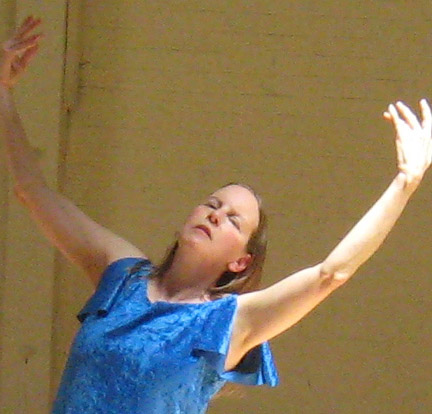 Avilee Goodwin has taught dance to a wide range of students for many years. She taught for over two decades at a small neighborhood dance studio in San Francisco, but has focused most of her career on bringing dance into public schools. She initiated a dance program at Hercules Middle School, then created and directed the dance program at East Oakland School of the Arts (EOSA), a small, arts-focused public high school for disadvantaged youth in the inner city. During EOSA’s seven-year span, dance studentsthere participated in adjudicated dance festivals and helped present dance education
workshops to teachers in the district as well as statewide and nationally. Ms. Goodwin’s focus on guiding young artists to develop their creative voices bore fruit as EOSA students were able to create effective and moving dance works expressing their life experiences. Since EOSA lost its arts programs, she now teaches at United For Success Academy, a public middle school in Oakland. Mrs. Goodwin also has presented workshops at state and national conferences, serves as the Northern California coordinator for the National Honor Society for Dance Arts, and recently spearheaded a PLC meeting group for K12 dance teachers in the East Bay and Marin. In her non-teaching dance life, she has performed with Ruth Botchan’s Hawkins-based modern dance company and a hula halau, as well as 20 years with Westwind Folk Ensemble. Currently she studies Duncan dance with Lois Flood with an eye toward passing on Isadora’s dance legacy.
LEADERSHIP LESSONS
“In many ways I have come full circle–but along the way I have gained so many insights and so much more faith in myself as a leader and advocate that I am in no way the same person I imagined I would be when I finally got here.”
One of the biggest areas of learning for me may have been how many forms advocacy can take–from talking about the value of dance education to specific school administrators, to beginning a long conversation among dance educators regarding our common frustrations with advocacy, to something as simple as responding to an article in the teachers’ union magazine (when the author neglected dance in the typical “art and music” formulation). Another huge area of learning for me was that I can still be a dance education leader and advocate, even at a time when my students were so difficult that I [lost confidence] as a teacher. Avilee joined the leadership cohort after three frustrating years of trying to convince yet another school administrator to begin a dance program–a battle she had been fighting her entire career. She created exemplary programs only to have the district close the schools or shift priorities. As the leadership process came to a close, Avilee landed her dream job, once again growing a dance program at an urban high school, but this time with district support.

![IMG_0320[1]](https://lunadancecreativity.org/wp-content/uploads/2013/11/IMG_03201.jpeg) Beth Megill, MFA in Dance UC Irvine, BFA UC Santa Barbara, Language of Dance® Specialist, teaches a variety of courses at Moorpark College, currently including Modern Dance, Jazz Dance, Dance Production and Dance Appreciation in addition to choreographing for the Spring musicals. She is also artistic director of Megill & Company, a non-profit dance theater company located in Ventura county. Under the umbrella of Megill & Company Ms. Megill maintains a consistent relationship with a sister modern dance company Quinto Elemento in Puebla, Mexico where she often spends her summers teaching and choreographing. Ms. Megill believes in a comprehensive approach to teaching technique and performance often including her various backgrounds in Dance Theory, History, Yoga, Anatomy and Massage Therapy. She aims to foster well rounded artists who are open to new opportunities, growth and expression. Ms. Megill currently serves as co-President of the California Dance Education Association.
Beth Megill, MFA in Dance UC Irvine, BFA UC Santa Barbara, Language of Dance® Specialist, teaches a variety of courses at Moorpark College, currently including Modern Dance, Jazz Dance, Dance Production and Dance Appreciation in addition to choreographing for the Spring musicals. She is also artistic director of Megill & Company, a non-profit dance theater company located in Ventura county. Under the umbrella of Megill & Company Ms. Megill maintains a consistent relationship with a sister modern dance company Quinto Elemento in Puebla, Mexico where she often spends her summers teaching and choreographing. Ms. Megill believes in a comprehensive approach to teaching technique and performance often including her various backgrounds in Dance Theory, History, Yoga, Anatomy and Massage Therapy. She aims to foster well rounded artists who are open to new opportunities, growth and expression. Ms. Megill currently serves as co-President of the California Dance Education Association.
LEADERSHIP LESSONS
I was afraid to be great–to be too big. But now, I see that it was my ego that was trying to keep me small, out of fear. I am here to honor all that I am.
This course taught me that others believe in me. They look to me for guidance, support, ideas, vision, inspiration. It is in my nature to do the work. It feeds my soul to move the field forward. Initially, I felt like I was standing in a room with 10 doors and didn’t know which one to choose. I could do many things in the field, but I was convinced I couldn’t do it all. Now I have a new vision. I prop open one door of the 10-doored room and place a welcome mat at the threshold. I do the same at the next and the next until all doors are open. I don’t have to choose any one of them. I get to stay exactly where (who) I am and others come to me as needed. The world and its possibilities were always right there. By staying put in the hub of my world, I am able to connect these disparate world and anchor them with my grand vision.
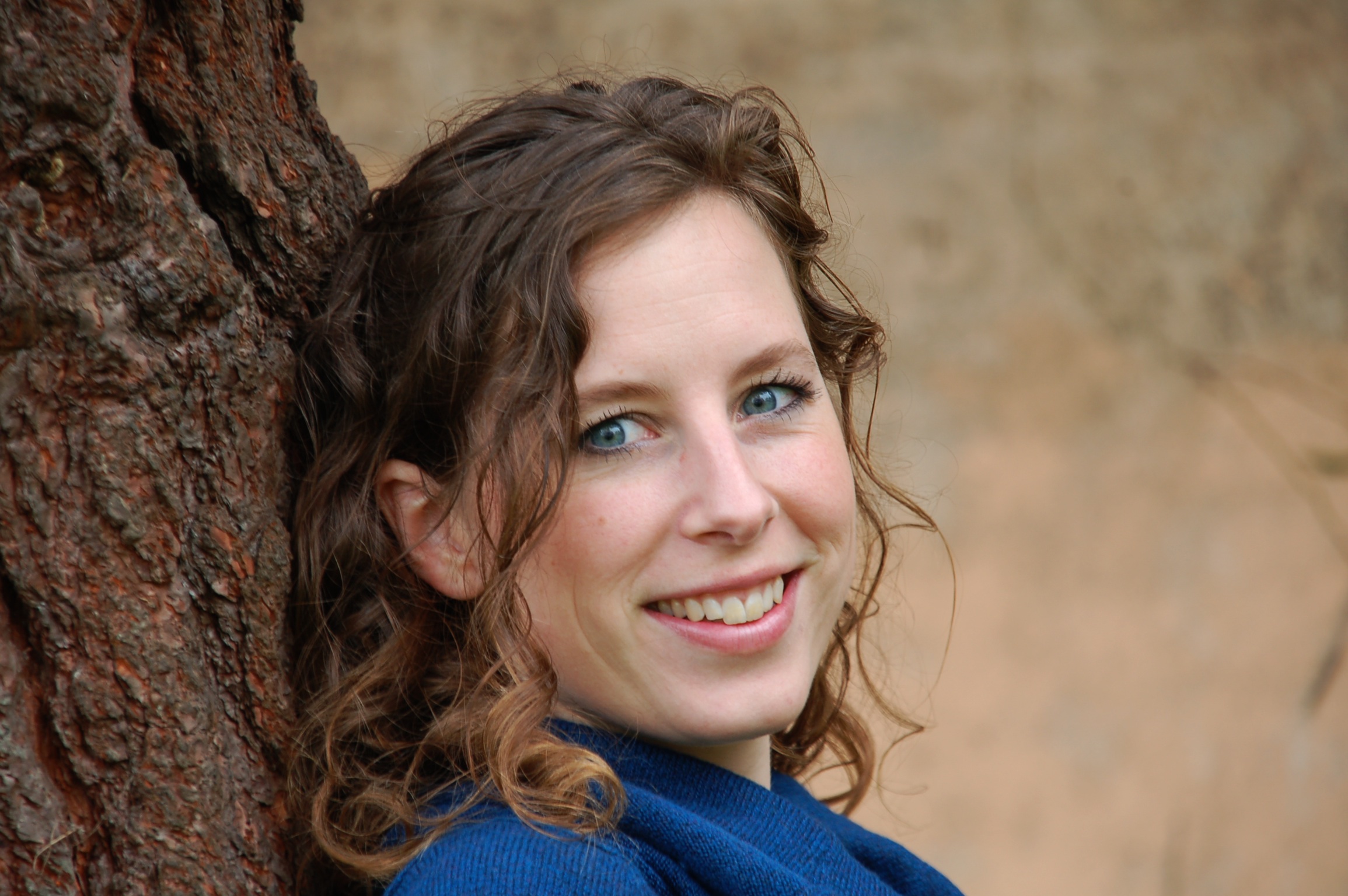 Annika Presley, originally from the Netherlands, has been working for AXIS Dance Company as the Education Director of the Education and Outreach Program Dance Access & Dance Access/KIDS! since 2007. She manages and trains teaching artists; teaches Physically Integrated Creative Dance to grades K-12; provides professional development trainings, and coordinates local and national performances. Additionally, she works as booking coordinator, grant writer, social media specialist, and web/video developer. Her rich professional background also includes research in Dutch Language and Literature, sign languages, and committee/board involvement.
LEADERSHIP LESSONS
Right now I feel stronger and more confident than ever. I bring this unique combination of experiences, skills and personality that makes me who I am. I won’t change for others.
Working on leaving my legacy has let me put systems in place that will guarantee that much of the arts education work (of this dance company) will continue. I am proud that I was able to secure, for the first time ever, proper planning and R & D time for the dancers to prep for our major education events. We implemented a 2-day education session with the dancers and broadened the definition of education. (When addressing dance and disability, every performance becomes a vehicle for powerful community education–Annika’s work was about seizing that. ) I learned that I want to establish Annika as educator and leader beyond representing a company. “The Leadership cohort has showed me where my strengths are, but also where my passion is. It has helped me articulate what is important to me in a career and how I want to be seen as a leader.”
 Heidi Opheim Sawicki, M. Ed. A Minnesota native, Ms. Sawicki graduated from St. Olaf College and performed for and with many choreographers in Minneapolis and New York City. As part of a dance collective, P.O.L.K.A., she received a McKnight Fellowship for their collaborative work. Always a dance advocate, she served on many committees for the Minnesota Dance Alliance, and she was the Managing Director of The Field in New York City. Currently, she is an elementary school teacher at Beach School in Piedmont, and has been fueled by professional development through Luna Dance Institute for eleven years, she focused on integrating movement into the classroom and teaching her students creative dance. Three years ago, she left teaching in the classroom to expand her role as the physical education teacher at her school to bring dance and the joy of movement to all children.
LEADERSHIP LESSONS
I have learned to create a vision and to take steps toward making the vision a reality. I have learned to use my natural enthusiasm and energy to guide students and staff toward a school that dances.
I am starting to get crystal clear that I can shape a PE program to include creative dance (of equal importance) along with PE. I am clear that I can encourage teachers on the district level to include dance in their PE program and motivate classroom teachers. I am clear that I can invite parents to view dance and to discuss dance on a deeper level this coming year. Last week I got the new principal and the assistant district superintendent to dance with us! Heidi provided professional development in dance to more than 400 educators this past year, as well as facilitating monthly peer learning. Toward the end of the year she was grappling with acknowledging responsibility for naming injustice and poor practices among colleagues. She wrote, “thanks for talking through a tough spot for me. I needed to know that it is OK to feel deeply and now come up with a plan to deal with what I know. It was a culminating conversation, encouraging me to take leadership to another level.”
by Jochelle Pereña, Luna Teaching Artist
It’s rehearsal. My collaborator and I are in the studio, surrounded by cover letters, calculators and laptops. Are we dancing? No, we have a grant due and are scrambling to collate application piles, six copies of this here, six copies of that there. This application asks for staples and hole punches; that one will not be viewed if it is stapled. We jokingly daydream of sugar daddies and trust funds that would allow us to focus solely on our art making. Like most dance artists, we spend just as much time writing grants, applications, doing arts administration, as we do in rehearsal. Just as much time attempting to articulate in words what is best expressed through movement, only to discover that we’re 200 words over the grant application’s word count. So we trim, trim, trim down our proposal to fit in the box, when really we’re trying to show how creative and out-of-the-box-thinking we are as choreographers.
I get it. Funders want to know that they’re investing in a legitimate project, in artists who will follow through. Often the only evidence they have of that is a stack of paper – budgets, bios, artistic statements, proposals. But what if the choreography spoke for itself? I mean, isn’t that what dance is supposed to do? What if funders could see and feel the art in action – even just the seeds of a piece – and then choose how to invest? Wouldn’t this be more authentic? And what would artists do with that “extra” time – the hours they spent grant writing? I’m willing to bet they’d be in the studio, making the best damn dance piece they could. A pretty sound investment.
Online crowdsourcing sites like Kickstarter and Indiegogo offer an alternative for artists. Through video and short paragraphs choreographers create webpages that present their work with language and an aesthetic in line with their vision – rather than laboring over the grant application checklist of multiple budgets and bios. As they share the link over email and social media, they promote their upcoming project all in one. One heartwarming thing that has emerged from crowdsourcing and social networking is the infrastructure of reciprocity amongst dance artists. Sheena contributed to my campaign, so I will certainly donate to hers. Colin encouraged his facebook friends to check out my link, I will do the same for him. We seem to be handing that same (virtual) $5, $10 and $20 bills back and forth as we support each other’s work. And it feels good to be backed by fellow artists, like we’re all in this thing together. The beauty of this model is that anyone, even if they are not art makers, can help make art happen by giving a little something.
I’ve had success with crowdsourcing, although for me it’s been more like communitysourcing. I am so grateful to all who have contributed to my projects (thank you thank you thank you!!), but all of my donors, like my audience members, have been my family and friends and dance colleagues. How can I widen my donor and audience base so that more people are interested and invested in my work, so that show nights are not just “Friends & Family Nights?”
With CHOREOFUND, Luna Dance Institute proposes an answer to this, and to my query regarding choreography speaking for itself. With hints of microfinancing and So You Think You Can Dance, CHOREOFUND presents six choreographers to an audience of thirty, each of whom drops two twenty-dollar bills in the kitty. Dance artists have an eight minute time limit to show their work and explain their project, and after seeing them all, the audience votes on which choreographer should be awarded the pool of $1200. It’s minimal paperwork and a direct give to the artist, based on her dance. It combines the fun and immediacy of a dance-off contest with the significance of making relevant art. Viewers become dance patrons, and get a peek at the very intimate, unpolished seeds of a dance piece. Choreographers meet potential new supporters and fans – people who want and actually do go to see more of their work. Luna provides the venue and the viewers, artists just have to show up and do what they do best.
While open to anyone and everyone, Luna particularly invites audience members who might not necessarily find themselves at countless dance concerts, or consider themselves philanthropists. They get to see how a small contribution can have a huge impact, and they are given a voice to be involved in the art scene, perhaps made more accessible. The goal is to cultivate more dance audience, more dance lovers – to bring all people to dance and dance to all people. And it is to keep raising the bar for choreography by allowing artists more time to actually make the dance, instead of writing about it.
by Patricia Reedy, Luna’s founder
The other day there was an article in the San Francisco Chronicle about a business philanthropist wanting to give money to San Francisco middle schools. Beyond tablets, and their respective ability for alternate ways to process learning, the SFUSD could not imagine uses for additional funds. This was incredible to me. We are a medium sized nonprofit and could at any moment identify entire program needs for gifts ranging from $5,000 to $5,000,000. “Knowing the need” is embedded in our mission statement and the continuing assessment that is part and parcel of our program planning and design. Is there something inherent in the size and bureaucratic set up of school districts that keeps vision so far away from finances? Are we at Luna more nimble because we are small? We work extensively in Oakland. I began to wonder if the Oakland Unified School District would be ready to receive such a generous offer.
I do not profess to understand anything about the inner workings or politics of school districts in general, or Oakland Unified School District specifically. All I know is my own organization’s experience as contract service provider over the past 11 years. We’ve been active in the district in lean times and less lean times, but mostly during the period of severe shifts caused by the teaching-to-the-test interpretation of No Child Left Behind. Despite the rather draconian policies and practices emerging throughout the nation, several visionary teachers and administrators in Oakland have seen the value of the arts to a child’s comprehensive education. For lots of reasons that have more to do with perception than evidence, dance is often the least likely art form to be included in program design; nonetheless, we’ve enjoyed building dance programs in key schools throughout the district. Our partnership with New Highland Academy has been most successful, due in large part to the consistent efforts of the principal, faculty and our organization to fund and deliver the program continually over time despite the whims of budget or trends that come down from the district or state department of education.
Our work at Grass Valley is new, but the relationship emerged from a series of unfortunate events that I fear is all too common in large, urban school districts. We were first approached in 2003 by a visionary principal at newly reorganized Tilden Elementary, a designated inclusion school. Tilden served children preK through second grade with and without disabilities; and the principal, teachers and therapist saw the value of dance to their students’ learning. For more than six years we worked to build a program that included weekly classes for students pre-K through 2nd grade, professional development for teachers and paraprofessionals, collaborative curriculum planning so that dance could be integrated into other academic subject matter, as well as offered as a discrete subject, and the first school performance assemblies with nationally known artists and dance companies. The stories of success were numerous. Children with autism learned to partner dance with peers, speak for the first time and increased their capacity to “self-sooth.” Two separate national conferences invited us to present the work at Tilden so that other professionals could learn strategies and be inspired. As we approached our 6th year, the principal was replaced with a principal who did not understand how “these kids” could learn “ballet” but at the insistence of the faculty allowed the program to continue anyway. That final year was grim because the district had decided to close the school site, relocate the families and use the building for district offices.
The close-knit group of teachers dispersed, but many of the families went on to attend Thurgood Marshall Elementary and one of the accompanying teachers asked us to build a program there. The principal at Marshall was supportive and strong and we began once again to build a sequence of dance learning (K-3 this time.) Because of our relationship with the Tilden teacher and her strong leadership skills, we clipped along quickly and, in only two years, four separate grade levels were receiving dance classes and teachers reported accompanying progress in language, expression, confidence and social interaction. Then, the district closed Marshall and relocated staff and families once again.
All four of our partner teachers at Marshall accompanied their families to Grass Valley Elementary where, with luck, another supportive principal encouraged the continuation of the dance program with the potential for building it out school-wide. Thus, this fall brings us to the second year at Grass Valley working with five teachers toward a scope-and-sequence of standards-based dance learning for all students. Imagine then our frustration when the district changed their contract process, resulting in a halt in services six weeks into the semester.
In the past, Oakland Unified School District had been notorious for its complicated contract process, resulting in artists and other contractors being paid late, sometimes as late as a year. Knowing this in advance, we quickly learned how to dot our i’s and cross our t’s, to be timely in our own response and to know the individuals who could nudge things along. We learned that, among other things, there was no district contract manager, unbelievable for a district that size so when they hired one three years ago, we were thrilled and things moved along swiftly in 2011-12 and 2012-13. This year, the district created an online system that has thrown everything into chaos. The administrative assistants at each school are now responsible for creating the online profiles and contracts and passing the process back and forth between a one-person tech support district contract person and their own office until all parts are satisfied and the contract can be sent for three separate district signatures, then a purchase order number can be issued and work can begin. Ultimately, this process might increase efficiency, but at present, the school personnel does not understand the process and there is a great deal of confusion, mis-communication and hurt feelings arising from people being expected to do a job without clear guidelines or training.
As a relationship-based organization, we pride ourselves in ending each year with an all-hands evaluation process and subsequent planning for the next year. Together, we are BUILDING a program and thus, continuity and progress is essential. By June of each prior year, new budgets are designed and new scopes of work for the upcoming year agreed upon. Luna faculty wants each child to receive the full 32 weeks of dance learning so we start right after Labor Day. This year was no different. We launched and taught weekly classes to over 600 children in 21 classes. Six weeks in, with no contract in sight, we have to pause, taking a break from service because technically, it isn’t prudent to work without a contract. This week, everyone is losing out. The school personnel doesn’t understand that in order to avoid the temporary “shut down” they needed to move things faster and figure out how to do so; the classroom teachers are left to figure out how to fill in the extra time with other curriculum; the children do not understand what happened to their dance classes and we at Luna have staff on payroll dismayed at doing administrative work while they wait to apply their craft. Our teachers have decades of experience teaching, performing and making dance. They are anxious to get back to doing what they do best.
In the context of a federal government shut down, this seems like a minor glitch—and we all know it is temporary and within a few weeks children will be creating and performing beautiful dance phrases that express their understanding of concepts, ideas, feelings and observations of the world around them. Yet, throughout the past 11 years, we’ve often felt like we were solely holding the continuity and progress of actualizing the district’s own Blueprint for Learning in Dance K-12. Today I wonder if Oakland would have an answer for Marc Benioff if he asked what they could do with a donation several million dollars?