Dance Educators Create Systemic Change
Cherie Hill – InDance

Cherie Hill – InDance
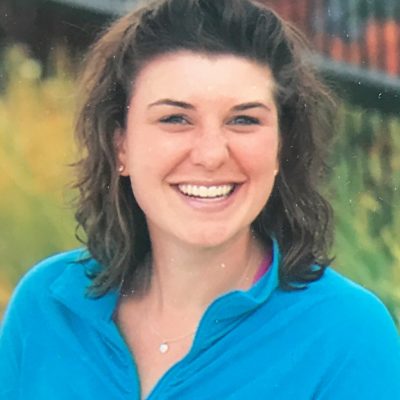
Physical Education teacher Laura Richey has found a way to bring creativity to all of her teaching. “In traditional PE training 15 years ago that was not the approach. [Luna’s Summer Institute] was almost like a rebirth as a teacher. Or an awakening, gosh, why haven’t I been teaching this way the whole time?” By participating in the Summer Institute (SI) in 2013 she was not only able to learn the language of dance but how to invigorate student learning. Now her teaching approach no longer is just a unit on dance, rather dance is interwoven into all of her curriculum, because she is using a creative lens in which to teach sports concepts. “So many of the dance concepts (pathways, changing directions, levels) you can apply throughout the whole curriculum, whether you are talking about soccer, lacrosse, or a tag-game. The start of the school year is full of Luna, because it is the springboard for some of the other concepts taught.”
Laura has been a PE teacher for a long time. Prior to teaching in Piedmont Unified in 2009, she taught in southern California in public and private schools. She has a long history in the field of Physical Education and has experienced the pedagogical shifts. Thinking about PE from a Creative Dance approach was a mental shift that now shapes her present teaching approach and in many ways she feels is her greatest achievement, bringing creative movement to the physical education setting where students typically are instructed on the “correct” way to move. “The goal of physical education is to create lifelong movers with high levels of physical literacy and self-efficacy related to their movement ability.”
Her first challenge was to overcome her feelings of hesitation because she did not identify as a dancer. The act of jumping right in would give her firsthand information on how her students might feel and how to support their learning, and Laura willingly took the plunge, saying: “You are never too old to re-invent or discover a new part of yourself.” As a SI participant she learned how to create a safe environment for students to experiment with movement concepts, develop a teaching progression for introducing dance concepts that bridge the gap between dance instruction and physical education, and embrace the idea that there can be no right/wrong way to move in PE class settings. “This new approach allows all students to experience success without a winning or losing atmosphere. This is important because students perceive success and failure in public and the more skilled sports movers typically dominate.” This creative approach is aligned with her physical education goals. Laura reflects that by giving students the power and responsibility to create movement and “be in charge,” they challenge their mind/body connection, therefore increasing their physical literacy.
Thinking about PE from a creative dance approach also shaped her role as a leader in Piedmont Unified School District (PUSD). In collaboration with her colleagues, she is working to shift instruction in PE in PUSD because she sees how “creative dance concepts weave beautifully into the CA physical education state standards and provide building blocks for movement concepts needed for students to be successful, competent movers.” She works with over 500 students TK-5th grade at Havens and other elementary schools. She shared that many of the PUSD PE team have taken courses through Luna and have adopted a creative dance, integrated approach to teaching. Now, spreading dance instruction throughout the district at all levels is important to them. They have become a support network and advocates for each other in the district. For example, when they heard that the high school dance teacher’s position was in jeopardy, all of the PE teachers lobbied on her behalf. “We have created and become allies and a community to each other.” They are also connecting high school dance teachers to elementary schools to provide opportunities for student showing, allowing elementary students to this is what dance can look like later in their school career. “We take elementary students to HS students’ performances and HS students will teach classes to the elementary.” Presently, PUSD is restructuring the PE department and program and the PE team is working together to advocate for a creative approach to instruction and expand dance. The process has its set of challenges but all of them are committed to shifting the paradigm. On this personal and professional journey into creativity Laura has found meaningful ways to impact those around her.
“It’s super important to feel comfortable with yourself, with your body and dancing really makes awareness in young children. Class like yours is so essential.” Studio Lab Parent
“I hope that this connection to herself and ability to take feedback/prompts without triggering that deep wound can continue to flourish and provide another way for her to navigate being a learner.” Studio Lab Parent
by Deborah Karp
In early August, I had the honor of presenting at the Kennedy Center-VSA Intersections conference in Austin, TX. My colleague, Nia Womack-Freeman, and I shared the successes, joys, challenges and discoveries of the first year of Luna’s Dance Inclusion Class pilot project. A school-wide initiative in partnership with Oakland Public School Grass Valley Elementary, Nia and I taught dance classes for children with and without disabilities across all grades in an effort to deepen a school culture of dance, empathy and community. At our conference presentation, participants from across the country danced full-out during an experiential lesson; smoothly turning and sliding in and out of the floor, sharply jumping and galloping toward and away from each other, creating short dance compositions and performing them for each other. After reflecting as a group, Nia and I gave a slide presentation addressing the history, details, and questions for further inquiry that arose from this project’s first year. We were met with a warm response; participants had questions and were hungry to find new ways to bring new inclusive dance to their students and communities. It was a fantastic opportunity to connect with colleagues at a national level, gain new tools and insights, and be inspired by new practices and approaches in art-making and ability. Some further resources we offered during our slide presentation are below.
Pamela Wolfberg’s Integrated Playgroups®
Universal Design for Learning: Why Does it Matter to Dance Teaching? By Patricia Reedy
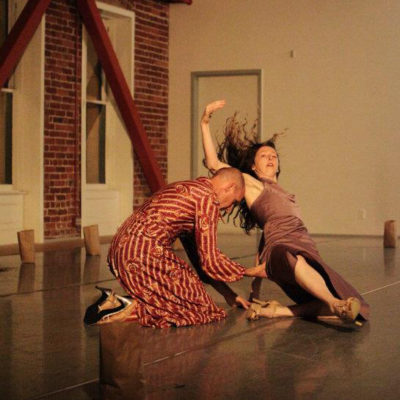
Rosemary first encountered Luna through founder Patricia Reedy when they were introduced at a Bay Area arts education providers’ meeting in the early 2000s. At the time Rosemary was already a well-seasoned teaching artist, having taught music and dance in public schools through the arts education non-profit Young Imaginations since 1996. Luna’s child-centered approach to creative dance education inspired her own teaching practice, and she found that the practical and theoretical training she received through Luna’s Professional Learning workshops complemented her degree in arts-integrated teaching. Rosemary is woven into Luna’s history and continuing legacy as a past faculty member 2005-07, as a Summer Institute alumna, and now as a colleague and fellow expert in the field.
A prolific artist and committed educator, Rosemary addresses her own creative identity by becoming actively involved in many facets of the Bay Area dance scene. From organizing dance events that build community, to cultivating much needed East Bay arts spaces through studio management, Rosemary, like many dancers, does a little bit of everything. But she has been most lauded for her choreography – her piece Gallus Gallus Domesticus was nominated for an Isadora Duncan Dance Award in 2013 – and for her teaching – she was recognized as an Outstanding Educator for Berkeley Unified School District in 2014.
Since 2007 she has been teaching standards-based dance at Berkeley’s Cragmont Elementary, where she also collaborates with classroom teachers to support the integration of dance into other core subject areas. Selected as one of Luna’s Leadership Cohort in 2015, Rosemary focused her inquiry on articulating dance goals to build a more comprehensive district-wide dance program in Berkeley Unified. She is a well-known local Contact Improvisation and Axis Syllabus teacher-candidate and the somatic inquiry of both practices inspires her investment in anatomy, biomechanics and physics. She continues “to be curious about the intersection of creative process and somatic inquiry” and how that manifests through technical training. She credits Luna for how she organizes her dance lessons and units. “The arc generally follows creative process cycles – exploration, improvisation, composition, performance, reflection.”
Rosemary’s long term impact on her students is clear from this story: Last year I was inspired by a student I had worked with who entered a grade level that I wasn’t teaching. He loved dancing so much he started choreographing a dance for his whole class. His teacher followed his lead and helped the class practice so that they were able to perform his dance at one of our school assemblies.
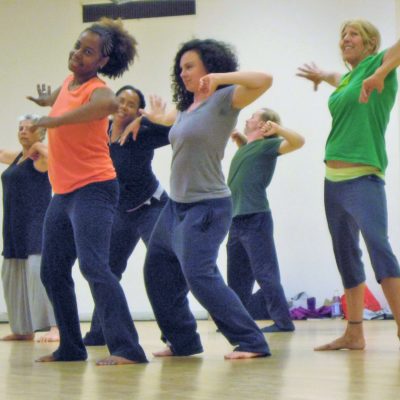
Grass Valley Elementary School teacher Paula Mitchell had a vision for school creativity that was 5 years in the making, and backed with 23 years of teaching experience. Two years ago, she left the classroom as a general education teacher to be a teacher on special assignment. Now she is responsible for building out project-based learning, maker education and blended-learning technology for the whole school. When asked what motivated her to do this she shared, “I am really interested in figuring out how to thoughtfully move away from scripted learning to more child-centered learning that brings out all the aspects of the child.” Paula remembers being a teacher in California during the No Child Left Behind legislation and statewide adopted scripted learning programs. “Scripted learning programs were killing the creativity.” Paula explains how makerspaces allow students to creatively show their strengths, while getting teachers invested and providing them support to infuse this learning approach into their classrooms.
Last year Grass Valley Elementary School started with four classrooms (general and special education) in the program, completing 3 projects, one each trimester. This year four new teachers joined the cohort and one teacher from last year’s cohort changed her role to Resource teacher. She is now using creative makerspaces to change student perspectives about how the Resource room is as a learning environment, shifting negative assumptions in both general and special education. Maker groups/teachers meet every Friday. “They come up with something so amazing. It’s so fun to get those ideas out.”
Paula wasn’t always able to teach in such a creative environment, but she was always curious to find ways to bring creativity into her classroom. Upon reflection, Paula states, “The MakerSpace is a journey that started with being more confident in my creative abilities, from participating in Luna Dance’s Summer Institute and the Integrated Learning Specialist Program (ILSP) with Alameda County.” Paula joined the Summer Institute in 2012 with a desire to bring creative movement expression into her classes. During her year as a Summer Institute participant she actively incorporated movement into her classrooms. She realized it was not realistic to expect kids to pay attention without movement. So she began using movement during transitions, to break up routine, and to provide what she calls “brain breaks.” During transitions she would invite students to choose a pathway and a motion, i.e. galloping on a curvy pathway. “They loved it.” To Paula, brain breaks were 10 minutes of time away from rigorous academics. She used movement for these breaks because she loved moving and dancing. Now, most of Grass Valley K-2nd grade teachers do them with their students, as a result of her sharing resources with them. Paula reiterated the importance of “honoring kids being kids. Not making them into something we want them to be, but letting them be who they are. We lose sight of it with all of the standards. However, there are lots of ways to achieve these goals and standards and still honor who they are.”
Luna Dance Institute has been a collaborative partner with Grass Valley Elementary school since 2012, bringing creative dance classes to children in grades K-5. Paula shares, “With Luna they learn vocabulary, movement, and it expands their creativity while they get a better sense of their body. Over the years that I have participated in Luna Dance, the toughest kids in class really shine in dance. They often times tend to be the most creative dancers.” Paula is most proud of being able to hold her vision for creative and inclusive spaces, believing it was possible, and now seeing it blossom at Grass Valley. She shared that she is creating her teaching position and still learning while doing it. Her next goal is to figure out a way to bridge art, music, dance and maker spaces together. She envisions students at the end of a maker unit doing their projects and presenting them in various ways using dance, art, music, and more. “I hope that the culture [of creativity] will be sustaining here and continue on. I am hoping that doing hands-on learning and creative expression becomes the Grass Valley way.”
“Dance has become my escape…When I dance, I feel everything but human. I almost feel god-like. When I dance, I feel like I matter.” Teen Choreo Workshop Dance Student
“Dance means how to express yourself. How to feel how you’re feeling.”
“This is the best day EVER!” (5 year old mini dance camper in response to parent asking how his day went)
Cherie Hill & Nancy Ng – Dance Education In Practice
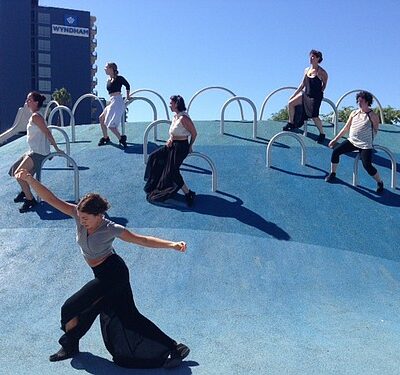
When Rebecca first came to Luna in 2009 she was teaching dance in a public school and struggling to expand her curriculum to include more student voice. After a couple of Lesson Studies, she was hooked. She applied and was accepted into the 2009 Summer Institute. A dancer, an educator, and now a mother, Rebecca is currently taking a break from teaching dance for the first time in 15 years to homeschool her four-year-old twin sons in San Diego. She looks forward to returning to teaching when they go to school.
While not currently in the classroom, Rebecca’s commitment to education remains strong and active. She is developing a middle school dance proposal for the Preuss School, a charter middle and high school for low-income families on the UCSD campus. She is also writing curriculum for Cultures in the Classroom, a program designed to increase cultural fluency among third and fourth graders. She remains attentive to maintaining creativity and constructivism: “Striking a balance between codified technique and individually generated movement is challenging, but essential. Dancers should learn to know and respect the great creative movers that have come before them, as well as realize that they are part of that tradition.”
Creatively, she is refueling, reinventing herself, and “reinhabiting” her body after having children, taking classes regularly in improvisation and techniques that are new to her. She has also been able to perform occasionally, most recently with Trolley Dances in San Diego, and enjoys the daily dance-play development of movement sequences with her children.
In her temporary hiatus from teaching, Rebecca is in a unique position to reflect on her evolution as an educator:
“Before I came to Luna, I knew there was a better way to teach movement, and I was so frustrated because I just could not conceptualize what it was. I didn’t have that framework myself. Luna opened a door to a new paradigm for me. So it’s hard to choose just one thing that I use today because I believe Luna shifted the way that I work. However, if I had to point to only a couple things, it would be the progression of a concept throughout a lesson, and verbal cuing that is specific, well-timed, and non-judgmental.
I am not sure where my next teaching job will be, or what I will be teaching (I am also credentialed K-6). But I know that it doesn’t really matter because, no matter the content, teaching is about the students. You are leading them out of themselves using content as a platform. When I think about my past experiences in the classroom, the best moments are the pride on the students’ faces when they create and share something they are truly proud of, as when an 8th grade group choreographed a truly show-stopping piece and were honored with positive feedback from their whole school. The best moments are when students form that uniquely precious camaraderie with their classmates, such as when a bunch of 8th grade boys who were so comfortable in class, they did not hesitate to try anything new, and would fist bump on the way out and say, “What happens in dance class, stays in dance class.” Or when a loud-mouthed, often crass boy partnered with a special needs girl in a wheel chair to create a piece to “Ain’t No Mountain High Enough” in which they both danced in and out of wheelchairs. He then went on to volunteer in a special needs summer camp.
The best moments are usually quiet and mostly unnoticed, when they realize they have gone beyond their perceived limits, whether it’s memorizing a combination for the first time, persevering through difficulty, getting out on that stage, or breaking a stereotype they were locked into. The best moments, and I know this is directly in line with the spirit of creative movement, are when the students regard each other with genuine interest and positivity instead of judgment and insecurity. Because they know each voice is unique and each voice is important.”