Our Legacy as Dancers, Educators and Change-makers
by Nancy Ng, Luna Teaching Artist
Extract from Nancy Keynote Presentation
California Dance Education Association (CDEA) Conference
January 26, 2018 Santa Clara University
Moving Bodies | Changing Minds: Our Legacy as dancers, educators and change-makers
With the recent success of TADA! The Theater and Dance Act, and the developing of California’s dance teaching credential, soon to be reinstated after 40+ years of advocacy by dance educators – I thought it might be interesting for us to see a little bit about how we got here today.
Let’s leap 40 years into the future. . .
The year is 2058, Maria, a high school senior in Fremont, California has a dilemma. She needs to choose between three exemplary undergraduate college dance teacher education programs—New York University, California State University East Bay, and the University of North Carolina Charlotte. Her choice is difficult—NYU will offer her substantial tuition assistance, but she wants to attend a school nearby to be close to her family. Maria danced weekly throughout her PK-5th grade elementary school years. In middle school she danced daily and these dance classes fulfilled the physical education requirement. Her high school offers a complete dance education program, which includes pedagogy, production elements, history, cultural forms, performance aesthetics, and choreography. Now, in her senior year, she will present an evening-length work with live music, in collaboration with the school’s music department. Last semester, as part of her school’s service learning program, she assisted 3rd-5th grade dance classes at the elementary school she attended. Maria received a rigorous dance education as a California public school student, enabling her to successfully audition into a university dance program. She hopes to pursue a career as a dance teacher, returning to her high school to teach the youth in the community she grew up in.
Let’s step back over 40 years from now to the past . . .
The year is 1972. I am 10 years old, taking ballet classes at Pat Miller’s dance studio in Eagle Rock, CA. There is no dance in my public school, and there will not be dance in middle school. The dance and theater teaching credentials were not re-instated in 1970.
The US is still involved in the Vietnam war, the Pentagon Papers were published in 1971 a year before. A year after, in 1973, Roe vs Wade will ensure women have a right to govern their bodies.
AND . . . . . drum roll, the California Dance Education Association is founded to reinstate the dance teaching credential.
Albirda Rose is a graduate student in dance at Mills College and attends the first meeting where CDEA is established. She becomes one of the first two student representatives for CDEA. With Tandy Beal, Frank Shawl and Victor Anderson, she piles into her husband’s van (see below for photos of Tandy, Frank, Victor and the van, respectively) to tour all over California, teaching master classes at colleges, universities and high schools. “We went everywhere in Northern California to spread the word of California Dance Educators, trying to get people to join, have memberships and this whole thing,” shares Albirda.
Last Friday, I had a chance to follow-up on my conversation with Albirda. I had been bugging her to get me the names of CDEA’s founding board. She called me while she was in her basement office looking through boxes of memorabilia. That’s when she texted me the photo of the van and read a CDEA newsletter to me that was thanking the founding board. These women were Joan Schlaich, dance director at Cal State Long Beach, Janice Plastino, also from southern Cal, and Diane Dunlap Grady. This basement conversation also revealed that Allegra Fuller Snyder from UCLA planned the first CDEA conference. Our conference planners today, Kristin and Virginia, would have had good company back then.
While a graduate student at Mills College, Albirda taught at Cal State Hayward and Chabot College, and then eventually continued her legacy at San Francisco State University while raising two sons. While a professor at SF State she championed two other projects that would become her life’s work – advocating tirelessly for the dance teaching credential and supporting Katherine Dunham in designing the Dunham Technique Certification.
Core to her advocacy work with the teaching credential was offering a PE credential with dance subject matter authorization at SF State. Albirda’s students needed a place to student teach so she founded Village Dancers, a program where college students could practice teaching children from low-income neighborhoods, at the same time offering kids without access to dance free classes after school and on Saturdays. Although Albirda is retired, Village Dancers continues with her supervising and sometimes at the African American Cultural Center in SF.
Thinking about the theme of this conference Moving Bodies | Changing Minds, I asked Albirda what inspired her to become a dancer. Her words flowed easily right out of her mouth, “Simple. I was raised in the dance world by Miss Beckford. I was one of her girls.” Miss Beckford was a dance icon in Oakland, having built up the Park and Recreations dance program as the place to dance. Not only did she mentor Albirda, but Deborah Vaughn, founder and director of Dimensions Dance Company, and Jackie Burgess who built up the program at El Cerrito High danced with Miss Beckford as well. (photo of Jessy Kronenberg, current El Cerrito High School Dance Teacher, Miss Beckford, and Jackie Burgess)
Albirda worked tirelessly for the dance teaching credential. Her commitment, passion and energy; values of kindness and compassion, love, and life-long dedication to social justice work inspired me when I was CDEA’s co-president also working toward the credential that is now a reality.
Why I Pursued Dance
For myself, when I reflect upon what really inspired me to really pursue dance – there are three moments: a one-time modern dance class taught by a Chinese- American lecturer from UCLA at my ballet studio. She was a guest teacher, and I remember being so impressed that she could sit in sideways split and lift up a few inches off the floor. But, what I most recall is I realized someone that looked like me could have a career as a dancer. Dragon lady, sloe-eyed, subservient geisha or wife.
The second moment was a mid-life crisis in my mid-20s where I realized that as a public school teacher, the system was stifling by individuality and creativity. I basically had a nervous breakdown, quit my teaching kindergarten teaching job, took a year to find myself, and enrolled in dance classes at City College of San Francisco. It was there that I choreographed by first dance and joined my first modern dance company, Six Thumbs; and following my education at CCSF I applied and was accepted to graduate school at Mills College, where I met Patricia, my colleague co-director at Luna, and Luna’s founder.
In my younger days with Six Thumbs, my colleague dancer, the late Michael Koob, encouraged me to think about teaching dance through what is now SFArtsEd. He was a colleague mentor to me when I first started as an itinerant teaching artist and was figuring out how to navigate the SF public school system. Koob passed away several years ago form AIDS. I remember thinking that his legacy had come full circle when I found out that one of Luna’s professional learning clients, was Koob’s teaching assistant as his health was failing him. In our dance community, we circle and spiral in and out of relationships as we move through our careers.
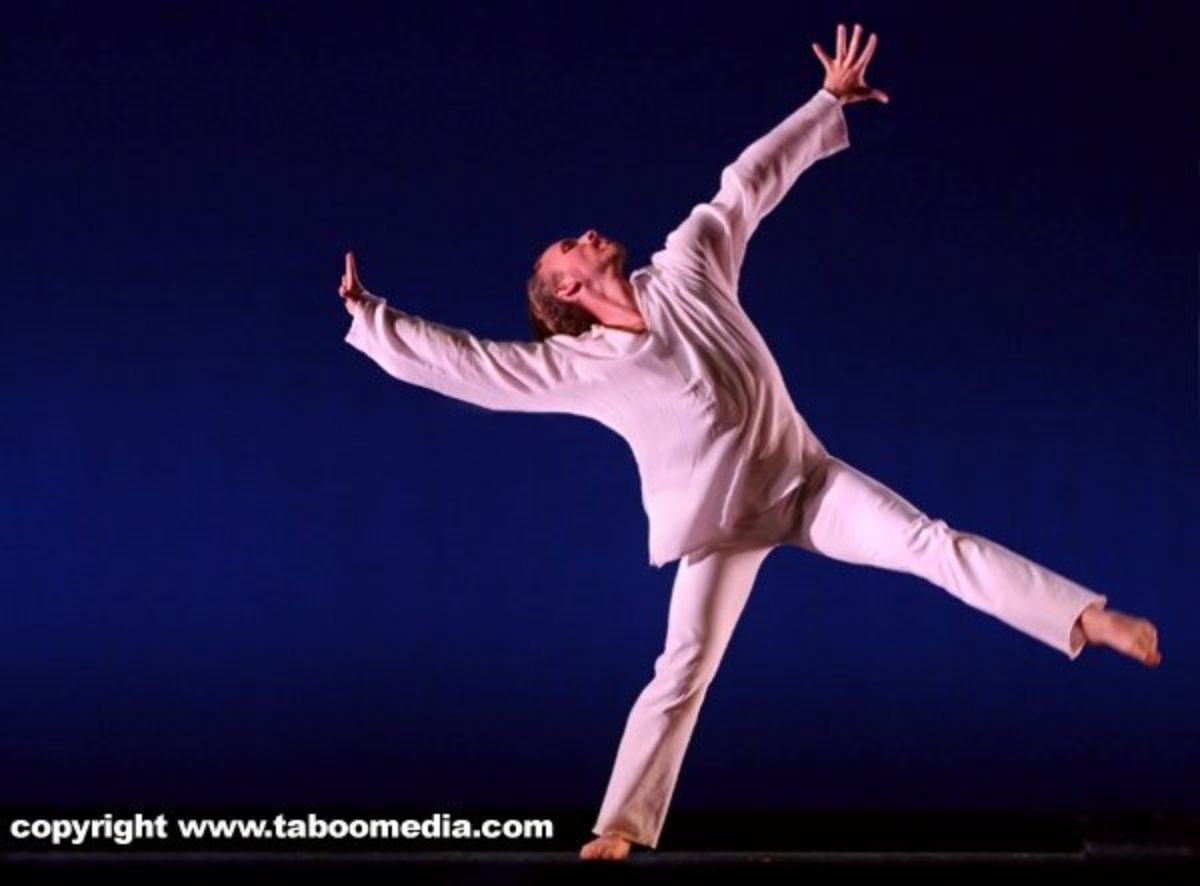
Moving on to moment three, which was rupturing my Achilles tendon at a photo shoot in my mid-30s – here is the jump that did it.
It was then, realizing my performing career was over that my calling as a dancer would be through dance education. I committed to a full-time role at Luna, and haven’t looked back since. More about Luna later on – I have done a lot of talking about myself and Albirda and now it’s time for your story.
Take a moment to think of your story. We all have a story to tell. How did YOU get here today? What were key events and /or people inspired you to move your body, and change your mind?
I cannot imagine another life for myself, another way toward right livelihood.
Right Livelihood
“When I’m taking dance class, I just feel so able. I feel like my body can do anything; like I’m Wonder Woman or something.”
“Dancing meant so much to me and helped my self-confidence. It is a place where I can express myself and be free…”
“Dance has made me change my life and experience what life is about through dancing.”
“When I see young children dancing…they are also laughing. They are expanding their sense of self and each other. Maybe that’s the beginning of school and social transformation.”
These are a few quotes from children and teachers who have experienced and witnessed the infinite possibilities dance brings to a right livelihood. What is a right livelihood? There are many definitions. Here are some definitions I found when I Googled the term:
“As a way of working and as a way of thinking about work, right livelihood embodies its own psychology—a psychology of a person moving toward the fullest participation in life, a person growing in self-awareness, trust and self-esteem.”
From the Buddhist Centre website, “Right livelihood is an important aspect of the Buddha’s Noble Eightfold Path. The Buddha encouraged his disciples to make their living in a way that does not cause harm and ideally that is ethically positive.”
Abraham Maslow calls it “‘self-actualizing’. The phrase simply means growing whole.”
I started contemplating right livelihood a few years ago, and I think that this is what the middle-aged crisis is about. Fortunately, I finished mine in my mid-20s when I committed to becoming a dancer. And, if dance, specifically dance education, is my right livelihood, what does this mean to me now in my work at Luna?
Luna Dance Institute
Since its founding on International Women’s Day in 1992, Luna has been a place where I have been able to meld by activist social justice self, with my passion for dance and my belief that education can be a path toward liberation and freedom. Fortunately, as an independent institution, not governed by a college or university or a government entity we are free to design programs that reflect our values, and truly live as an inquiry-based organization. We have several inquiry projects we are working on as an organization-wide and I want to share one in particular.
Along-side our organization-wide inquiry projects, each of us at Luna also has a personal inquiry. Mine for the next few years is focused on practice and policy. When I think about the organization I direct I am paying attention to these connections – how does our work with children, and our work with Professional Learning intersect with advocacy?
Advocacy
Asking a school site for the time, space and human resources to build a dance program is an act of advocacy, supporting teachers through our PL Institute in their role as community leaders is advocacy. These actions feed back into the practice of teaching students and dance teachers. As TADA! unfolds into dance teaching credential, I am more committed than ever to continue to advocate and work on policy for dance education in CA and across the United States. When I am 95 I want “Maria”, whom you met at this beginning of this presentation, to be teaching my grandchildren. For me now, that means stepping up to my next place as a leader – I recently joined the board of the National Guild for Community Arts Education – one of two dancers on a 25 member board, and 1 of 2 women of color.
When I consider CDEA’s policy work, I also think about how each of us as practicing teachers can influence decision-makers in our own sphere. As CDEA members, our most recent success with TADA! illuminates this.
Jessy Kronenberg, our outgoing CDEA, co-president is one example of teaching practitioners influencing policy in a really MAJOR way. I was with her when she testified before the commission on teacher credentialing in 2014 – sharing her “practice” , i.e. her struggles and the ridiculousness to be validated in dance education through a PE credential.
All of you, also CHANGED policy – you wrote letters and/or championed this at the union level. And look, two years later we have a dance teaching credential. I realize there was a perfect storm of events that helped make this the right moment in time. And, more importantly, I realize that this was a 46 year effort of each generation of CDEA leaders supporting the next . . . this was a legacy of dance educators and activists working together in a community on behalf of dance – our right livelihood.
In each of our communities, there is still more work to be done so as you think about your story and the moments that brought you here – where are you now in the process of your right livelihood as dance educator and advocate?
Let’s consider –
How we can insert ourselves to create change, and stand up for dance.
How do we draw upon the legacy of our colleague dance educators and work together as a movement chorus?
How do we pay attention to our actions everyday was we create change through dance?