

Story #25 – Chantal Sampogna
 Courage. Luna taught me about courage, and the importance of having a space in which courage can develop. Every bit of choreography, and every bit of relationship -building, is risk taking.
I first met Luna: a dance world, when I met Patricia at UC Berkeley in 1991. Luna, and all its possibilities and breath, spilled out of Patricia, and out of Luna’s first home on Park Blvd, that day and every day thereafter.
Patricia introduced me to modern and creative dance, and to all the freedom, connection, and strength that grows from this ever self-reflective and community-building dance world. I had the opportunity to dance in Patricia’s company, to be inspired by the many professional women who took evening classes after their long days at work, and the many, many children and families that walked through Luna’s doors every week to dance. It welcomed the dancer within me in such stark contrast to the world of ballet from which I had come.
Luna taught me about the development of choreography – how we graft our exploration, initiation, choices, emotions, history, dreams, and communication to form our dance. As a new dance teacher, I had the opportunity to sit around a dining room table with the Luna Kids Dance founders, with recently printed dance flyers and Luna sandwich board signs at our sides, and bear witness to the deconstruction of generally accepted dance curriculum. In true Luna form, we challenged every assumption, questioned the role and delivery of technique when developing young choreographers, and rebuilt Luna’s studio lab and professional learning curriculum to honor the child and child expression. Luna’s early teacher development programs taught me more than any legal training I have had about the child as participant, in relationships, as witness, and communicator; these trainings strengthened my resolve to continue serving children through our legal system and to continue challenging my own dancing into my adult life.
For children and families living within our foster care system, one might think that physical self-expression – dancing as individuals, learning about others through watching their dances, and dancing together – would be a luxury not to be brought to these families separated due to abuse or neglect. Patricia and Nancy challenged me to further my query about whether Luna’s parent/child dance classes could be brought to these families, families I was working with as a dependency attorney. Over the past 17 years, MPACT (Moving Parents and Children Together) has also provided its children and families a safe space to find their courage to witness each other, to look each other in the eyes, to create together, to dance together, and to find the courage to learn about their self-expression, and relating to their child or parent, while others are watching. Through my work with MPACT I learned more about Luna – how the spiral of query, exploration, patience, and reflection builds relationships and dance, shifting them out of day-dreams and into reality. At the same time, Luna supported my personal query of whether I could live in both the dance and legal worlds as an adult and as a mother. A truer gift I could never have received.
Over the past nine years on Luna’s Board, I learned even more about Luna’s commitment to its values as a feminist and social justice organization. Luna continuously challenges itself to dispel myths about the role a dance organization can play — Luna is a local, statewide, and national leader in dance and parent/child dance education. Luna is committed to providing its dance teaching artists with competitive salaries and benefits, has established itself as a major advocate towards teacher credentialing; and is constantly bringing dance to all children and all children to dance.
Dancing with children and diving deep with them into concepts of space, force, and time continues to feed me individually, as a parent, and attorney. My time dancing with my sons, Dominic and Leed, has made us happy, brought us laughter, and deep understanding of each other. Leed was born on Luna’s birthday and International Women’s Day and Patricia was at his birth. Patricia’s connection to time, body, need, and breath, as well as how she leads others to bring themselves and what they want to offer forward, made that birthing experience a forever life changing event in so many ways.
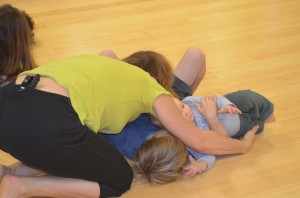
Luna continues to influence my parenting every day – when I make eye contact, mirror, and shadow dance with my sons; it has helped me to make space for, and welcome, their rolling and tumbling; to appreciate their own self-query when they move smoothly and contrast it with sharp jabs; when they move over and under each other. Just the other day, after a difficult day, I saw Leed, my four-year-old, begin to dance in the living room. It was subtle – he did a mild roll, placed one hand and foot on the ground and lifted his other leg high and over, till he was sitting. He was dancing. I joined him – we did some over and under, some connected shoulders and heads, and crawled and slid; Dominic, my almost nine-year old joined. I lifted him, our arms crossed, we danced low – and then I spun him – my young boy, now 4’ 6” and 60 lbs, wanted to be spun and held by his mom — the vestibular, one of Dominic’s favorites – and the trust and security, we can find when dancing with someone. His joy and comfort and release was immense.

 By Nancy Ng
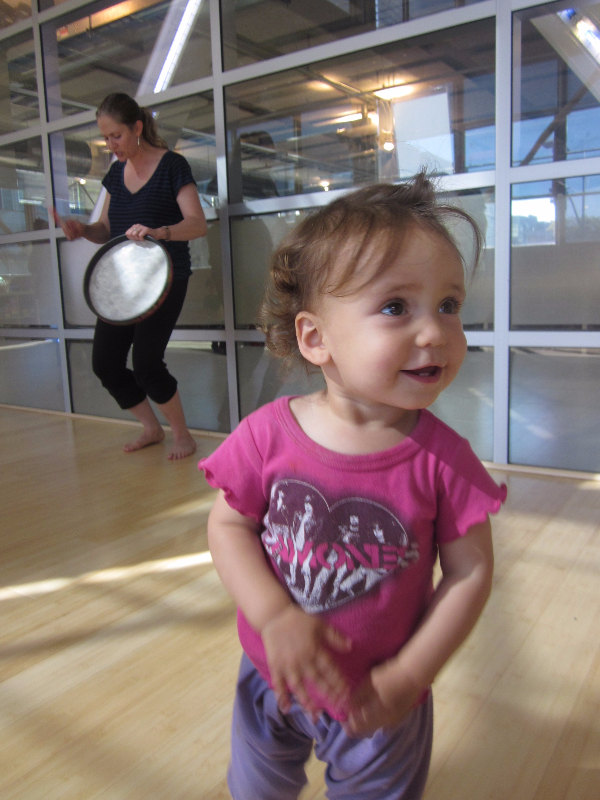 I remember meeting Vanina at an MPACT class with her family in 2012, and admiring how dedicated she was to dancing with her child, and to the program. She knew quite a few other families, whom I later learned were part of her parent-run co-op. For years, she or husband brought their daughter to dance with us. When classes were huge, they volunteered to help pass out the snack. Now, I have the pleasure of training Vanina in teaching family dance, and I am in awe at how natural leading families appears for her, and her quick ability to improvise when needed in the moment. After a day of robust MPACT teaching I sat down with Vanina to capture parts of her story.
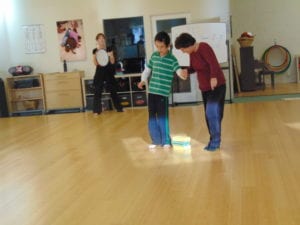 Interview by Nancy Ng.

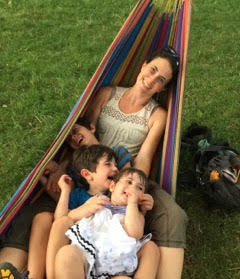 The lessons and legacy of my time working at Luna Dance Institute have been formative in my life as a professional and as a mother. I began working as an intern with Luna in 2003, became an employee into 2004. I worked as a development associate, and dance teaching artist for special needs preschool and elementary school classrooms as well as in the MPACT program. Luna’s mission of bringing creativity, equality and community to every child through dance aligns so deeply with my own professional and personal goals that each role I held for Luna allowed me to become more fully myself. In particular one aspect of my work for Luna which I valued enormously was the way the structure of the organization embraced each employee as a multifaceted individual who could simultaneously hold multiple roles. At Luna, everyone was an artist valued for their creative input, an administrator or coordinator valued for their intellectual and organization contributions, a teacher valued for what we had to give to others, a student valued for what we could learn, and a member of a community valued for how we worked together. I felt uniquely embraced in my working life as whole person; body, mind and spirit.
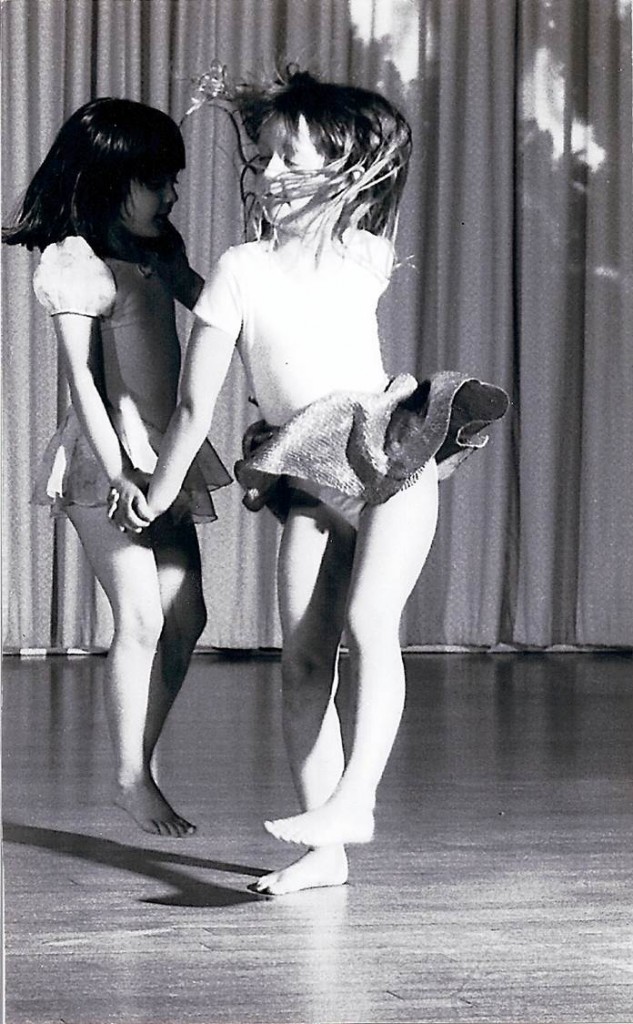 In my 25 years at Luna, a surprising aspect of our work has been to witness how dance often provides continuity. For some families, dance class is one of the most consistent things in their lives. We might see a child dancing with a foster parent in MPACT classes at one library. The next year, we see that same child at a residential center with her biological mother. Later, we find her again in second grade dance class at the public elementary school. This happens again and again.
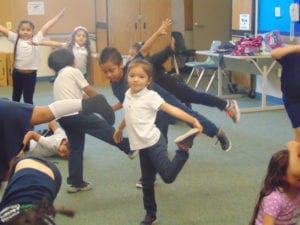 Micaela is a bright first-grader at International Community School in East Oakland with dark curly hair tied in a high side ponytail decorated with a colorful ribbon. When I first met her in the Fall, she had a difficult time interacting in the dance class. She would stand still, off to the side while other students danced through the room. Her teachers’ told me that they had recommended an IEP, Individualized Educational Program, to help her get the support they imagined she needed.
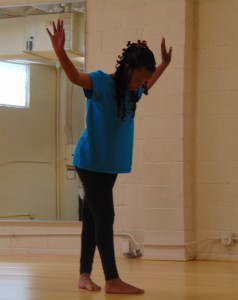 While looking for extracurricular activities four years ago for my now 11-year old daughter Renee, I happily discovered Luna Dance Institute. Over the years we have found the Luna experience to be one of the most positive for choreographed movement for children and youth in the Bay Area. Young dancers are allowed to explore space and movement with guided instruction utilizing planned curriculum – something we had not experienced in other dance classes.