Dance-a-rama Saturday 2-5pm
Come dance with us! Afternoon dance party with games, prizes, classes, and fun! Raising funds for children’s scholarships. $25 donation at the door leads to tons of fun. Click here for more.

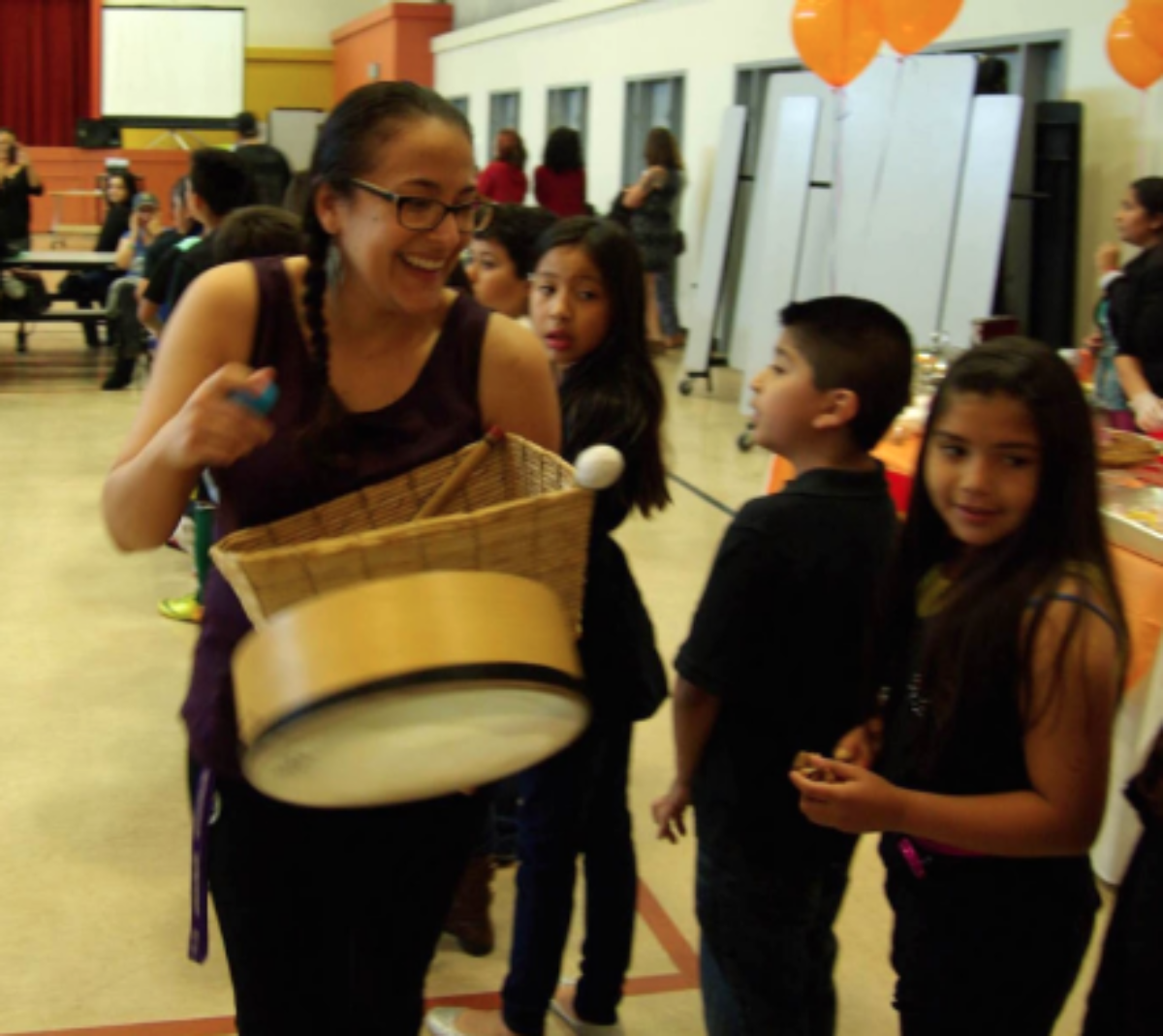
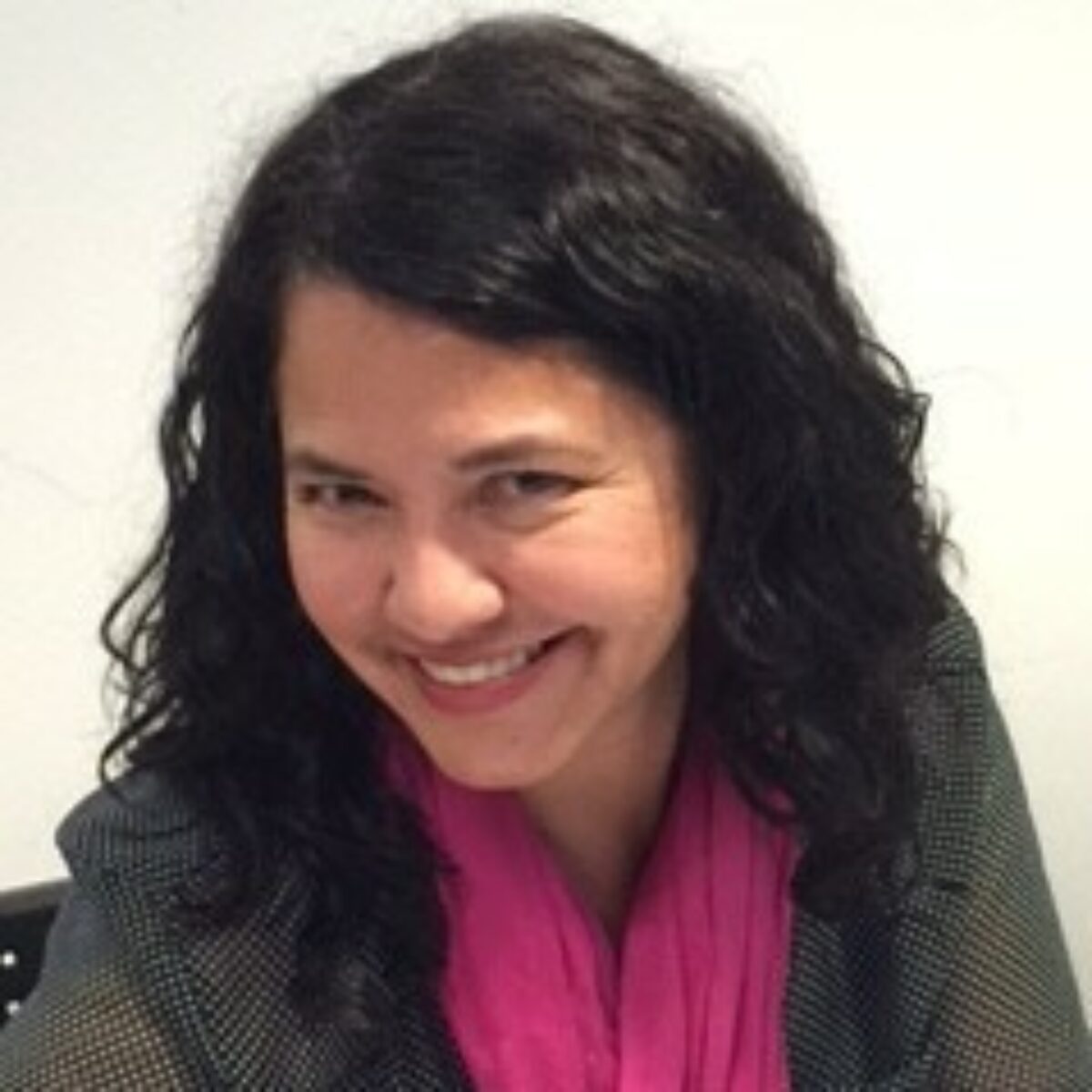
Christina Ayala lives and teaches in Oakland, CA. She first learned about Luna Dance Institute when she was a student in Patricia’s pedagogy class while getting her credential at Mills College (2011). At that time she had questions about advocacy and was curious about how to create arts programs in schools where they previously did not exist. However, she did not begin her teaching career as a performing arts teacher, but as a classroom teacher at a K-8 public charter school in Oakland. Committed to arts advocacy, in 2015 she joined Luna Dance Institute’s Summer Institute program. During her year-long participation in the program she shared, “Something I learned from Luna is that there is no ONE correct way to teach creative dance, and that it is flexible to meet the needs of learners (and educators). Depending on a student’s developmental level, experience, interest and ability, they may need to go in different directions, and the Luna approach encourages that kind of differentiation.”
Christina was instrumental in designing the arts program that she had been advocating for since 2011. She now teaches dance, music and writing at her school.
Luna changed not just my work, but my life, in a very meaningful way. After the SI, feeling stuck in a rut with my practice, I began to reinvent my own philosophy and approach to education, which led to me advocating for and creating a position for performing arts education at my school. Now, in addition to classroom teaching, I have the immense privilege of guiding students into their bodies and creative spirits through music and dance.
I feel like I’ve come full circle. When I was at a K-8 school growing up that was where I first learned to dance. Then I was a classroom teacher for several years, and now not only do I get to teach dance, but I get to be the very first dance teacher at my school.
To learn more about Christina and the work she does visit her blog: http://ascendarts.blogspot.com/
Luna Dance Institute offers a summer internship program for those wanting to gain proficiency working with a non-profit organization in the field of dance education. Applications available upon request. Read more about the program, application process, and position requirements here.
Luna Dance Institute is 25 this year-founded on March 8th. We launched our Silver Jubilee celebrations with a family dance birthday party January 7th, a 5-school flash mob on March 8th, and our gala on Saturday, March 18th.
Next join us for 25 Points of View on April 20th, and our Dance-A-Rama April 29th. The menu of activities can be found here.

Fresh out of graduate school in 2012, Rebecca was working at the Larkspur Corte Madera School District that was in the midst of a 5-year Arts Integration grant. Eagerly she joined the Site Arts Team to share her interest in offering more dance to students with disabilities. She had a hunch that dance would support their social skills and language development. During a meeting a grant administrator leaned over to her, saying, “Have you heard of Luna Dance? We need to get you into their trainings.” She immediately started investigating, discovered the Summer Institute, applied and was selected for the 2013 cohort. A life-long learner, Rebecca returns regularly to Luna for professional development, most recently as part of the second Leadership Institute in 2015. She has been a regular panelist at Luna’s annual Dance & Disability Discourse, and a soft-facilitator at follow-up Inclusion & Accessibility Practitioner Exchanges, sharing her expertise in Autism Spectrum Disorders and Alternative Augmentative Communication.
Rebecca is a committed educator who reflects on and delves into her pedagogical research from many angles. She currently continues her work as a Speech-Language Pathologist in the Larkspur Corte Madera School District, investigating the integration of dance and movement with language development, social-emotional growth, and speech articulation goals. There Rebecca teaches a weekly dance class for preschoolers and English Language Learners focusing on language and articulation. On other fronts, she is completing an Expressive Arts Therapy training through the Tamalpa Institute, teaching in the Integrated Learning Specialist Learning Program supporting educators with developing and deepening practices of creativity and equity in their learning environments, and has just begun a graduate program in Educational Administration. She is also a devoted mother to an “amazing 11 year old son who teaches me how magical the human brain is as he grows, extends, and re-defines limited assumptions about what people on the Autism Spectrum look, sound, and think like.”
Fueled by advocacy skills and field evidence gathered during Luna’s Leadership Institute, Rebecca’s articulate voice for dance integration grows in strength and volume, and she clearly reveals its positive impact on language development, abstract conceptual thinking, and social-emotional reciprocity practices. But her inquisitive mind doesn’t stop here. This work has opened new doors of inquiry for her regarding the power of dance: “I am curious about how the body processes injustice and how we can utilize somatic tracking to gain understanding about how racism is stored in the body depending on one’s positionality to relationship to white supremacy. Ultimately my inquiry into how the body “holds” injustice is geared by an inquiry into the body as an agent of change and its relationship to the body politic.
What I am really about today is acting on the urgency to make art-making the language of social justice work. I am compelled to consider how all thinking about equity and liberation can be most poignantly said through the creative language of working in symbols. For the students that I directly work with who have various disabilities (communicative, cognitive and sometimes physical), I feel that working through the modality of dance has radical potential to transform their brains towards thinking in abstract forms and hold their skill development in social relationships through self-regulation and community-minded thinking that dance can hold for all of us.”
The faculty at Luna are thrilled and honored to be featured in this month’s Dance Teacher Magazine and to be celebrating 25 years. Claudia Bauer wrote a beautiful article capturing Luna’s essence. DTM1702_CV1r1 DTM1702_LunaDance

Luna’s partnership with New Highland Academy began eleven years ago when we were invited to help build a comprehensive, standards-based dance program that would eventually bring weekly dance classes to each student in the school. One of the New Highland teachers we have been honored to work with is Emily Blossom. Initially a kindergarten educator, Emily currently teaches first grade. A singer and musician, Emily brings to her classroom a rich repertoire of song, and now, through her connection to Luna, incorporates creative movement. “At first, I was simply taking my students to dance class and not involved in the class. Over the years, I started collaborating more closely with my Luna partners in designing the dance experiences of my students. After many years of shorter professional development experiences with Luna dance, I found my way to the SI in 2015.” She dances the Brain Dance daily with her students, and uses the language of dance to enliven transitions between activities and classroom customs. Her continued interest in arts integrated learning has brought her back to Luna as a soft-facilitator on Dance as Arts Integration Practitioner Exchanges.
Responsible for teaching all subjects, Emily’s recent year-long inquiry looks at ways dance can support literacy, especially in her classroom where 70% of students are English Language Learners. She explored how students expand their writing and oral skills to describe their experience of dance, both as observers and as dancers, and how they can use writing to compose dances and plan ahead. Her research was supported by her own experience in the SI, and her interaction with other educators which broadened her understanding of the power of creative expression in helping people learn. “I have seen how movement gives a voice to students who otherwise might not have one – such as those who don’t yet speak English.”
Emily’s investigation included observation of her students, the creation of student dance journals in which they wrote regularly, and “Lunch Bunch” interviews during we she chatted with students while they watched videos of themselves dancing. Below is one such interview and her reflections:
Me: Can you describe what you’re talking about–tell us what they’re [your fellow students] doing.
L: He’s bowing and spreading his arms wide.
J: I think that was like a bird.
Me: Do you think that was what he wanted to do? Can you use any dance words?
J: Smoothing.
Jh: Loose.
I’m listening for how they describe their experience, and if they access the content vocabulary that they’ve been exposed to. I try to ask questions that are both open-ended and specific enough to get them talking.
E says, “She’s moving like a little slug, like a little caterpillar.” E’s an ELL, and she’s struggling to find the words, but she’s using her body to show the way an inchworm folds itself and then expands forward. The others supply some more ideas: “bursting,” “falling,” “twirling,” “balancing.” When they’re finished eating, we move to the classroom rug and I ask them to show me some of the moves they saw each other making in the video. They happily demonstrate for me, reenacting each other’s creative explorations.
I listen to this recording on my way home. I’m hearing the kids’ processing in a new way, when I have the luxury of not managing the class or thinking about the next step, but just listening to them. While their language is imprecise, they’re noticing details about each other’s dancing that I didn’t appreciate because I was so focused on whether or not they could use the specific vocabulary. I’ve kept these recordings of lunch conversations with my students on my phone for months now, because every time I listen to them, I hear something I hadn’t noticed before. I keep thinking about the value of teaching dance, and the ways that the arts can support a child’s emerging literacy. Rarely do teachers have the time or even the reason for “targeted listening” like this. What a gift!

When Annika started her new role as Education Director for AXIS Dance Company in 2007, she sought out Luna for professional development. “When I began I wasn’t familiar with creative dance, Luna taught me a lot of the basics.” From an introductory workshop with Nancy Ng in San Anselmo, to one of the selected Summer Institute ‘07 participants, Annika quickly applied what she learned from Luna to her teaching with AXIS, then returned to share her continued inquiry, stories, challenges and successes from the field. She has facilitated dance and disability workshops at our Summer Institute, engaged in discourse as a featured panelist, and led discussions around accessibility and inclusion at Luna’s Practitioner Exchanges. Chosen to be part of Luna’s first Leadership Institute cohort in 2013, Annika established herself as an educator and leader while building a legacy through AXIS’s dynamic community education program. “Beyond the basics, Luna taught me to believe in myself, to value my own creativity, thoughts and expressions. They helped me become a stronger leader in the field.”
Annika now acts as Managing Director for Amy Seiwert’s Imagery, a Contemporary Ballet Company in San Francisco, and has recently been teaching dance and drama at the Arc of San Francisco, a learning and achievement center for adults with developmental disabilities. Her investigation in teaching practice prevails: How can I push my students beyond what they think they are capable of, beyond their movement habits, and ensure that their self-confidence grows along the way?
She tells this story: “When I started teaching at the Arc, I was told that one of the participants Melvin (60+) would likely never participate in the class. “He might sit in the room, but don’t count on him participating”. Melvin who had been going to the Arc most of his life was known for never interacting with others, just sitting on a chair all day holding a basketball. During my first classes this was true. My classes begin in a circle with the brain dance followed by a group phrase in which every participant makes one movement. We would go around the circle and every time I would ask Melvin to give me a movement. No matter how small his reaction, I would take that as his movement: a shrug of the shoulder, shaking his head, and everyone would do Melvin’s movement. I continued this for a few weeks and all of a sudden one day Melvin joined the circle. His involvement was still very minimal, but he was there. Over the months Melvin started participating more and one day after we did a structured improve showing, Melvin came up to me and said: “I want to be in the performance next year, I want to be a star!” People working at the Arc couldn’t believe their eyes and ears. Melvin began interacting more with other clients, became more communicative and a year later he performed at one of the Arc’s events. To everyone’s surprise he even walked up to the microphone and addressed a room of 300 people. This was the man who I was told would never participate in my class. It’s progress like that that keeps my teaching bug going.”
Please provide the following details: